
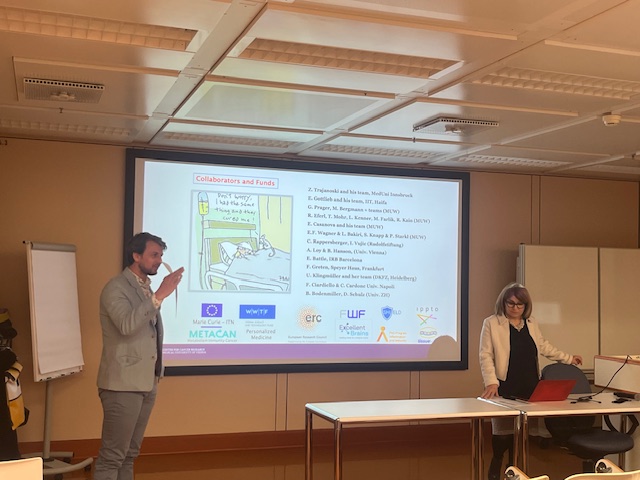
The second Organoid Meeting 2026 of the Comprehensive Cancer Centre Vienna, hosted by Johannes Gojo and Michael Bergmann on 9 February, attracted around 110 translational researchers and clinicians. The meeting presented 3D cell culture systems, known as organoids, from a wide variety of tissues and how they can be used to study tumour development. It provided an excellent opportunity for exchange, networking and discussion. “The CCC organoid community met for the second time to exchange novel insights in precision medicine using modern organoid technology. The meeting covered a variety of solid malignancies with a strong focus on brain cancer, sarcomas, and gastrointestinal cancer. Researchers presented novel technical advances introducing complex organoids co-cultivated with fibroblasts, immune cell and endothelial cells, rendering organoids more and more close to the patients’ tumor tissue. Omic analysis of organoids are also being used to better understand therapy resistance in various tumor types but also the origin of rare tumor such as certain brain tumor types”, summaries co-host Michael Bergmann, Department of General Surgery.




Exchange of Novel Insights in Precision Medicine
The second Organoid Meeting of the Comprehensive Cancer Centre Vienna, hosted by Johannes Gojo and Michael Bergmann on 9 February 2026, attracted around 110 translational researchers and clinicians. The meeting presented 3D cell culture systems, known as organoids, from a wide variety of tissues and how they can be used to study tumour development. It provided an excellent opportunity for exchange, networking and discussion.
“The CCC organoid community met for the second time to exchange novel insights in precision medicine using modern organoid technology. The meeting covered a variety of solid malignancies with a strong focus on brain cancer, sarcomas, and gastrointestinal cancer. Researchers presented novel technical advances introducing complex organoids co-cultivated with fibroblasts, immune cell and endothelial cells, rendering organoids more and more close to the patients’ tumor tissue. Omic analysis of organoids are also being used to better understand therapy resistance in various tumor types but also the origin of rare tumor such as certain brain tumor types”, summaries co-host Michael Bergmann, Department of General Surgery.
Developments in the field of precision medicine using organoid technology
Helmut Dolznig, Institute of Medical Genetics, summarizes three findings from the meeting:
1) We learn from in-depth analysis of these organoid models using descriptive and functional experiments. Of particular note here is single-cell sequencing for the characterization of cell heterogeneity in vitro and its change during functional intervention (e.g., through therapy).
2) There is not a high interest in the interaction of organoids with the microenvironment. We see i) integration of organoid models into their structural environment, ii) analysis of cell communication between organoids and surrounding cells to better reflect the in vivo situation and iii) replication of the surrounding microenvironment or integration of tumor models into organoid models that reflect normal organs. (e.g., brain tumors in normal, in vitro replicated brain tissue).
3) We also see that organoid models are used to validate therapy response in patients.
“This is what science is all about”
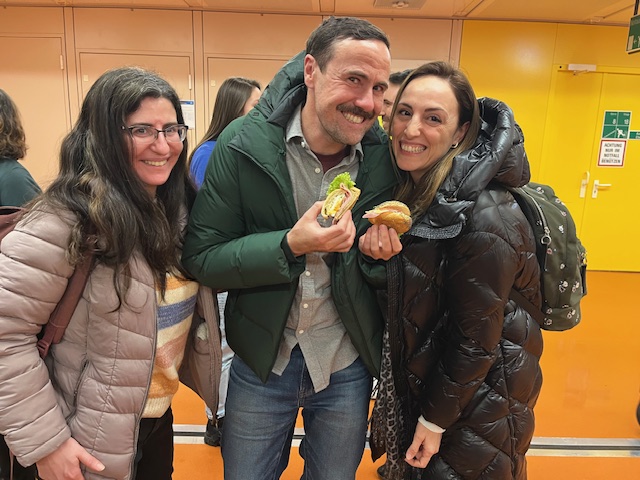
“The CCC Organoid Community is growing as rapidly as the field of organoids itself. We are delighted to be actively involved in this inspiring meeting," says participant Nicole Amberg, Department of Neurology. Matthias Farlik-Födinger, Department of Dermatology, was enthusiastic about the CCC Organoid Meeting: “A meeting with friends and collaboration partners for an update on the numerous possibilities to use organoids in precision medicine and beyond. An inspiring and joyful get together with great discussions and new perspectives. This is what science is all about. CCC rocks!“
Host Johannes Gojo, CCC Board of Directors and Department of Pediatrics and Adolescent Medicine also emphasised the development of CCC funding, which was also evident at the meeting: “In particular, projects were presented that were developed on the basis of the latest CCC research grants and are now being incorporated into large consortia”.The current call for applications for the CCC Vienna Cancer Grants 2026 is now open.
That was the program of the 2. CCC Organoid Meeting